
Spinal Stenosis
What is Spinal Stenosis?
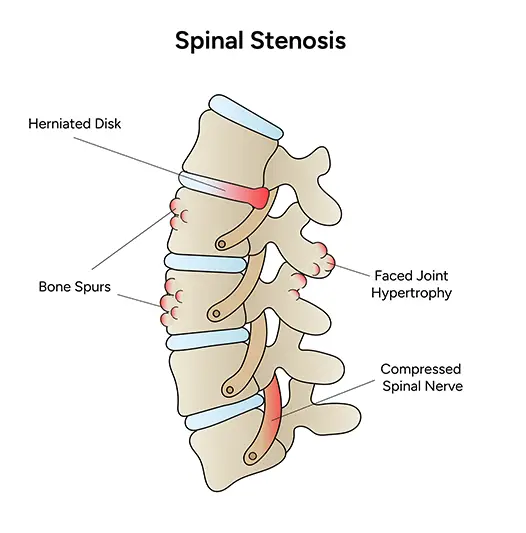
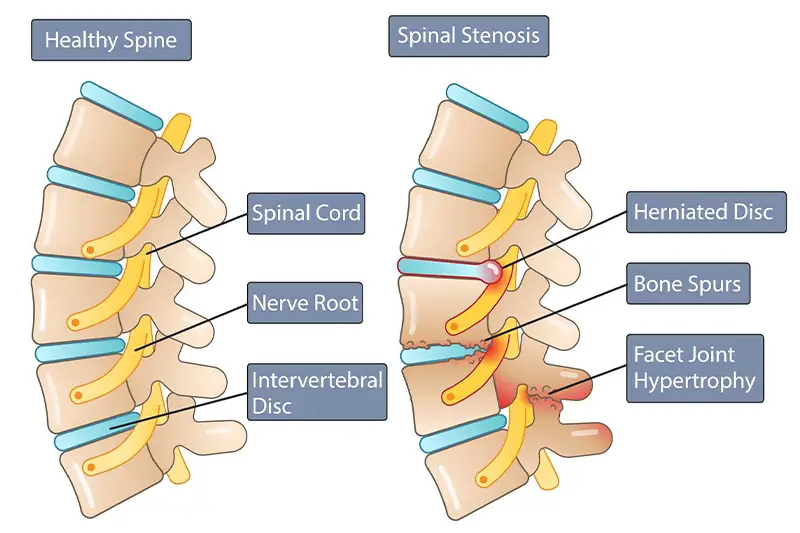
Spinal stenosis is a condition in which the spaces within the spinal canal become narrowed, placing pressure on the spinal cord and nearby nerve roots.
This narrowing most commonly occurs due to age-related degenerative changes in the spine and is frequently seen in the lumbar (lower back) and cervical (neck) regions. Spinal stenosis can lead to pain, numbness, weakness, and difficulty walking or performing daily activities.
We’d Love to Help.
Fill the Form and We’ll Be in Touch
Symptoms
Common symptoms of spinal stenosis include:
- Lower back or neck pain
- Pain radiating into the arms or legs
- Numbness and tingling sensations
- Muscle weakness
- Difficulty walking for long distances
- Balance problems
- Symptoms that improve when sitting or bending forward
- Reduced mobility and physical endurance
Contact Us Today!
Your path to a healthier life starts here—contact us and let’s take the first step together.
Causes and Risk Factors
Spinal stenosis may develop due to:
- Age-related spinal degeneration
- Degenerative disc disease
- Osteoarthritis and bone spur formation
- Thickening of spinal ligaments
- Herniated discs
- Previous spinal injuries or surgeries
- Congenital narrowing of the spinal canal
Goals of Treatment
The primary goals of treatment include:
- Reducing pain and nerve irritation
- Improving mobility and walking capacity
- Increasing muscle strength and spinal stability
- Enhancing balance and coordination
- Supporting daily activities and independence
- Delaying or avoiding surgical intervention when possible
Treatment Approach
Many patients with spinal stenosis can benefit from conservative rehabilitation and non-surgical treatment options.
- Exercise therapy and spinal stabilization exercises
- Manual therapy
- Clinical Pilates
- Electrotherapy and advanced physical therapy modalities
- Postural correction and ergonomic training
- Flexibility and mobility exercises
- Pain management programs
- Functional rehabilitation and gait training
Who Can Benefit?
Spinal stenosis rehabilitation is suitable for:
- Individuals experiencing chronic back or neck pain
- Patients with numbness, tingling, or weakness in the arms or legs
- People with walking difficulties related to spinal narrowing
- Individuals seeking non-surgical treatment options
- Older adults with degenerative spinal conditions
Treatment Process
The duration of treatment depends on symptom severity, the degree of spinal narrowing, and the patient’s functional goals.
Many patients experience improvements in pain, walking ability, and mobility within several weeks of structured rehabilitation. Regular exercise and long-term spinal care are essential for maintaining results.
Frequently Asked Questions (FAQ)
Yes. Many patients experience significant improvement with conservative treatment and rehabilitation without requiring surgery.
The structural narrowing usually remains, but symptoms can often be effectively managed through rehabilitation and lifestyle modifications.
Yes. Appropriate walking programs and supervised exercise can help improve mobility and endurance.
Treatment duration varies depending on the severity of symptoms and individual rehabilitation goals.
Yes. Degenerative changes may progress with age, which is why regular follow-up and rehabilitation are important.
Surgery may be considered when severe nerve compression causes significant weakness, loss of function, or when conservative treatment fails to provide adequate relief.
